Isolation valves: which to fit and how many
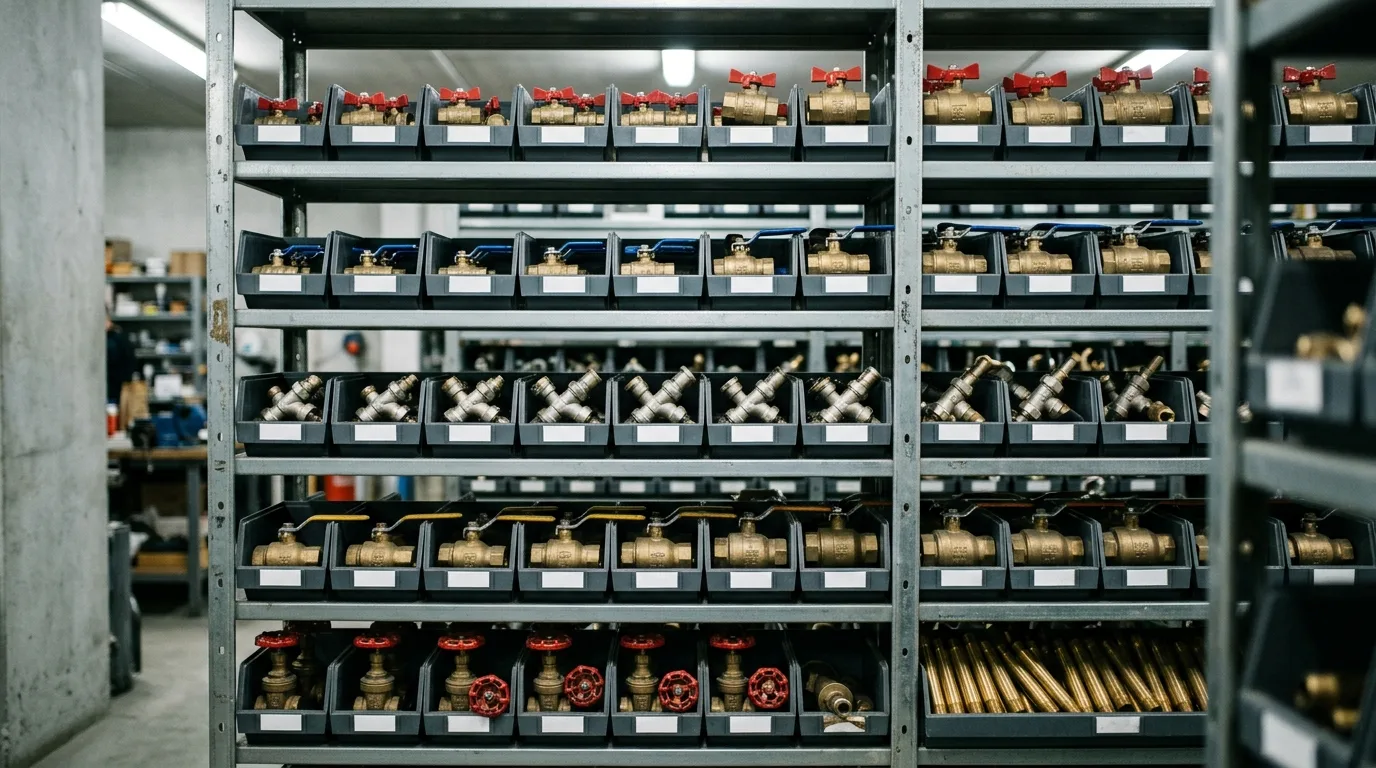
Types and where they belong
| Type | How it works | Where it fits |
|---|---|---|
| Full-bore ball valve | quarter turn, bore matches the pipe | inlet, risers, mains — the default choice |
| Standard-bore ball valve | quarter turn, bore narrower than the pipe | appliance connections where the restriction doesn't matter |
| Globe (screw-down) valve | multi-turn, throttles flow | where you need regulation, not just isolation |
| Angle stop valve | ball or ceramic-disc type; body turned through 90° | connections to taps, cisterns, appliances |
| Valve with union | detachable joint | before a meter, pump or filter |
A ball valve isn't made for throttling: half-open, the flow cuts across the ball edge and destroys the seat.
Where the valves actually go
The red dashed line is the edge of your side: everything to the left of it is communal property.
A valve on every branch means changing a tap doesn't leave the whole flat without water.
How many isolation points
- One main valve for the flat — full bore, with a union so it can be serviced.
- A valve on each riser (hot, cold) after the inlet.
- A valve per branch or appliance: tap, cistern, washing machine, dishwasher, water heater.
- A separate valve before anything serviceable: filter, meter, PRV, pump.
The meter and its connections are sealed, and the first isolating valve belongs to the building, not to you: don't replace it yourself — a broken seal means a report and back-billing. Those jobs go through the building management or the water utility.
What matters when choosing
- Full bore on mains: standard bore restricts the line more than the catalogue suggests.
- Butterfly handles suit tight spaces; levers suit open positions and larger sizes.
- Work your own valves at least every few months, fully shut and open again: a ball valve seizes in whatever position it sits in, and in an emergency it simply won't turn.
- An old riser valve that hasn't moved in years is different — don't test it “just to see”. A seized stem starts weeping through the gland, and then you have nothing to shut the riser with. Only try it when you're ready to replace it.
- Put appliance valves where a hand reaches without a stool — they only get used if using them is easy.
Common mistakes
Common questions
How many shut-off valves does a flat need?
One full-bore inlet valve with a union, one valve per riser, one per branch and appliance — tap, cistern, washing machine, dishwasher, water heater — plus a separate valve in front of anything serviceable: filter, meter, pressure reducer, pump.
Can I throttle the flow with a ball valve?
No. Half open, the stream hits the edge of the ball and destroys the seat. A ball valve lives in two positions, open and closed; use a globe valve where you actually need to regulate.
Can a valve be tiled over?
No: shut-off valves are serviceable and have to stay accessible. A buried valve is pointless — you cannot reach it exactly when you need it.