What connects to what
Pipes are listed by outside diameter — the number printed on the pipe.
A tap, a manifold or an appliance is a thread: female if it takes a male end, male if it is a spigot.
Going to take it apart later? Put a union — a demountable joint of the same size — where the tool shows a thread.
Two systems only ever meet at a thread
There is no fitting that fuses multilayer into PP-R, and there never will be: one is welded at 260 °C, the other is clamped cold onto an insert. Every crossing between systems goes the same way — each pipe gets its own adapter to a thread, and the two threads meet in the middle.
That is why the tool sometimes answers with two parts instead of one. It is not being pedantic: a single part that fuses PP-R on one end and crimps multilayer on the other does not exist in any catalogue.
| System | Pipe | Thread it lands on |
|---|---|---|
| PP-R | d20 | 1/2″ |
| PP-R | d25 | 3/4″ |
| PP-R | d32 | 1″ |
| PP-R | d40 | 1 1/4″ |
| PP-R | d50 | 1 1/2″ |
| PP-R | d63 | 2″ |
| Multilayer | d16 | 1/2″ |
| Multilayer | d20 | 3/4″ |
| Multilayer | d26 | 3/4″ |
| Multilayer | d32 | 1″ |
| PEX | d16 | 1/2″ |
| PEX | d20 | 3/4″ |
| PEX | d25 | 1″ |
| Copper | d15 | 1/2″ |
| Copper | d22 | 3/4″ |
| Copper | d28 | 1″ |
| HDPE | d20 | 1/2″ |
| HDPE | d25 | 3/4″ |
| HDPE | d32 | 1″ |
| HDPE | d40 | 1 1/4″ |
| HDPE | d50 | 1 1/2″ |
| HDPE | d63 | 2″ |
The right-hand column is the thread each pipe size normally comes to. Match those two numbers and the transition is one adapter per side; if they differ, a reducing bush joins them.
What these parts look like
None of the shots below are drawings. Each one is the builder's own render of the catalogue part — the same picture the app puts on its tiles — so a name the tool gives you has a shape you can recognise on the shelf.
The diameters shown are typical ones: the shape is what tells the parts apart, and it does not change with size. The size to ask for is the one in the answer above.
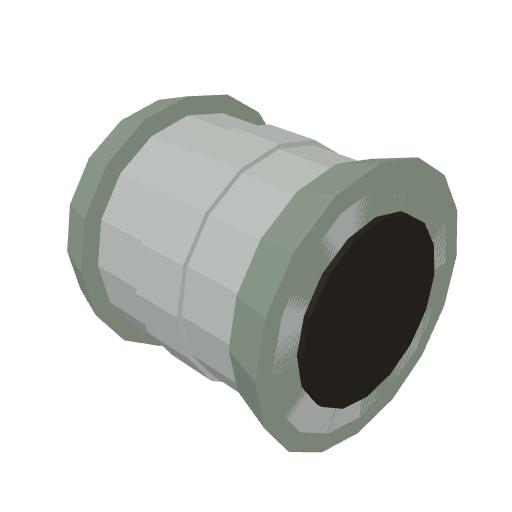
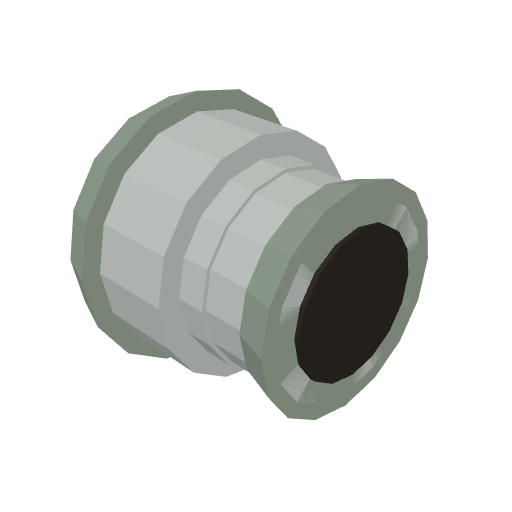
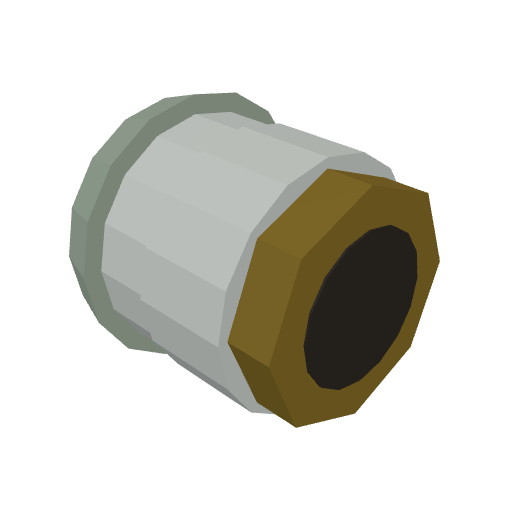
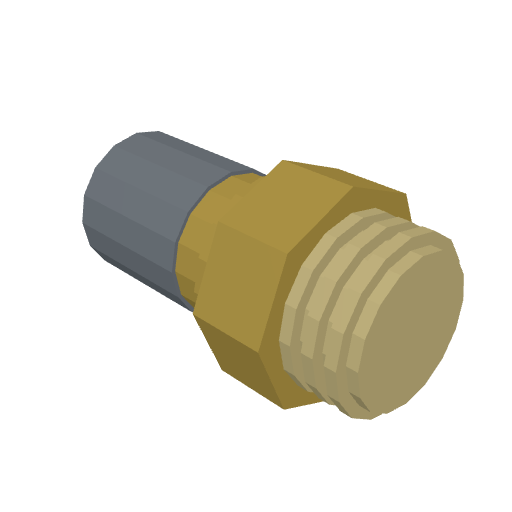
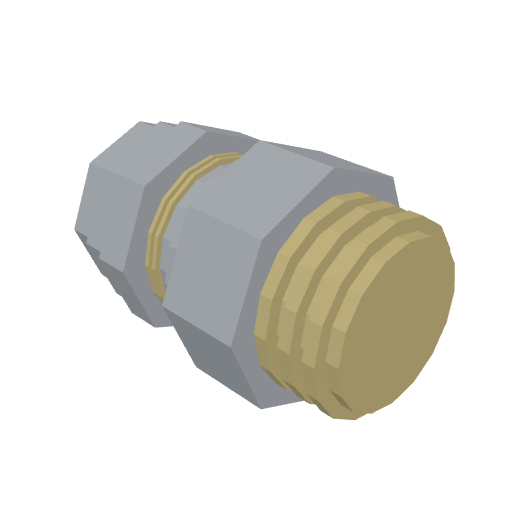
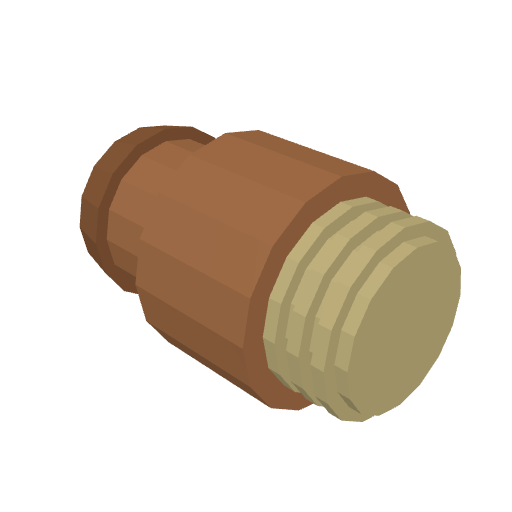
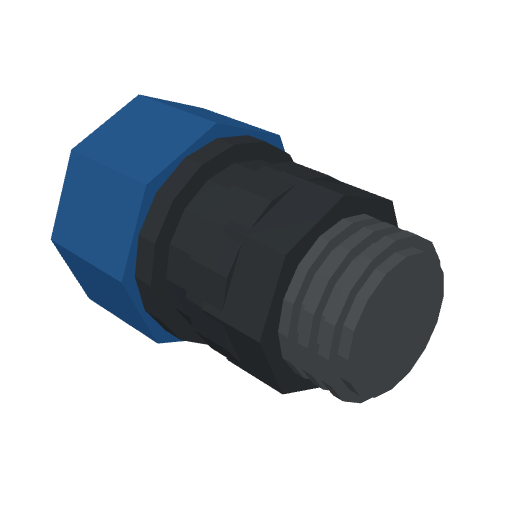
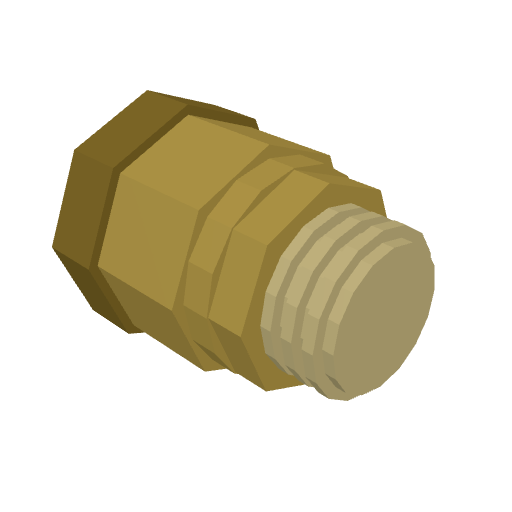
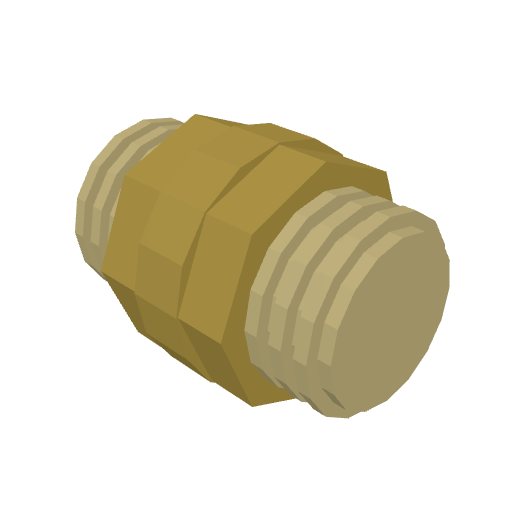
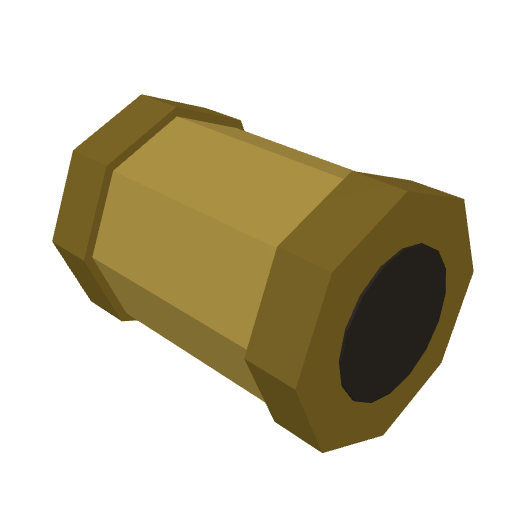
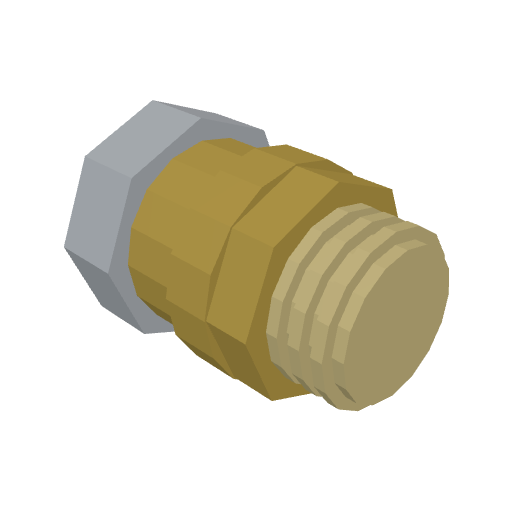
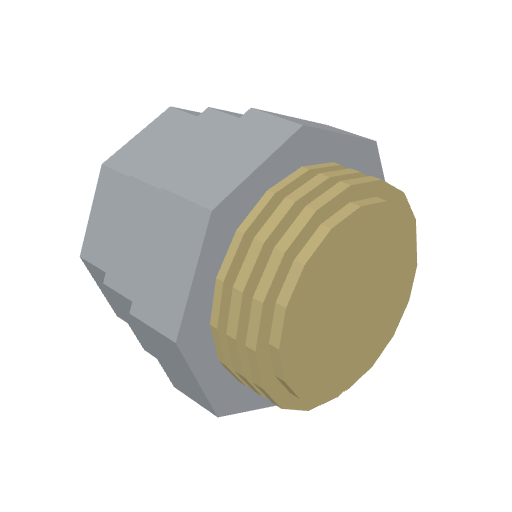
The last two are the demountable ones: a union, which comes apart without cutting anything, and a eurocone — the nut a multilayer or PEX pipe arrives at a manifold with.
Same system, different size
Inside one system the answer is short. Equal diameters take a plain coupling; different diameters take a reducing one, and the size is written large-to-small the way it is printed on the part — d32 × d25, never the other way round.
A reducer is not a free choice, though. Narrowing a run because a d20 fitting was on the shelf costs pressure at the far tap, and it never comes back.
Two threads and neither one will turn
Threads only work in pairs — one male, one female. Two male ends need a socket between them; two female ends need a barrel nipple. The tool names both, because a shop assistant will ask which one you mean and the words are not interchangeable.
If the sizes differ as well, the part in the middle is a reducing bush: it carries a female thread for the male end and a male thread for the female one. A 3/4″ tap on a 1/2″ pipe is exactly this case.
Where to leave the joint demountable
Anything you will one day unscrew — a meter, a filter, a pump, a water heater — deserves a union instead of a plain threaded joint. It costs one part more and saves cutting the pipe when that thing is replaced.
The rule of thumb is simple: if the part behind the joint has a service life shorter than the pipe, the joint should come apart.
Common questions
How do I connect a multilayer pipe to a polypropylene one?
Through a thread, in two parts: a PP-R threaded coupling on the polypropylene side and a compression adapter on the multilayer side, with the two threads screwed together and sealed. There is no single fitting that does both — the two systems are joined by completely different methods.
What joins HDPE to polypropylene?
A thread, in two parts: an HDPE compression adapter d32 × 1″ male on the outdoor side, a PP-R threaded coupling d32 × 1″ female on the house side. This is the most common joint of the lot — HDPE comes in from the well or the street, PP-R runs through the house, and they swap over right here.
What joins a plastic pipe to a metal one?
The same way: the plastic pipe gets an adapter to a thread, and that thread goes onto the steel one. Match the thread sizes first — a d25 PP-R pipe lands on 3/4″, and a 1/2″ steel pipe will need a reducing bush in between.
What is the part that goes from 3/4 to 1/2 called?
A reducing bush, if it is female on the large side and male on the small one. If both ends are female it is a reducing socket, and if both are male it is a reducing nipple. Pick the pair of genders first, the size second — that is the order the tool above asks in.
Can two pipes be joined without a thread?
Within one system, yes — a coupling fused, crimped or soldered straight onto both ends, which is also the joint least likely to weep. Between two different systems, no: the thread is the only end the two of them share.
Which thread does PP-R 25 come to?
Three-quarters. PP-R 20 lands on 1/2″, PP-R 25 on 3/4″, PP-R 32 on 1″ — the rest of the row is in the table above. The inch to mm tool shows what those threads actually measure.